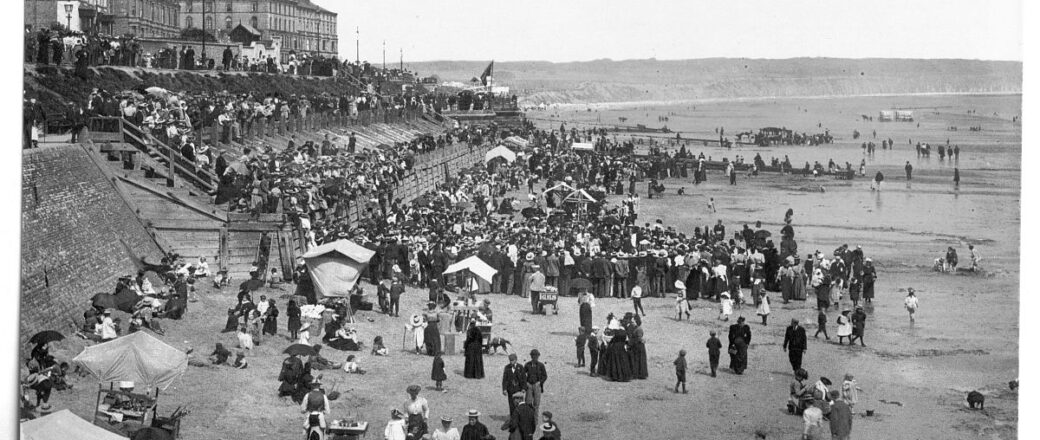

The expansion of the railway network in the mid-19th century brought an influx of tourists to Bridlington, eager to experience the fresh sea air and therapeutic waters. Seaside promenades became lively centers of activity, with well-dressed Victorians strolling along the harbor and sandy beaches. Beach huts, bathing machines, and grand hotels catered to the growing number of middle-class holidaymakers.
Despite the rise of tourism, Bridlington’s fishing industry remained vital. Fishermen continued their age-old traditions, casting nets from wooden boats and selling fresh catches at the bustling quayside markets. The harbor was a hub of trade, with ships importing coal, timber, and other goods essential for the town’s development.
The town’s streets were lined with a mixture of elegant Georgian-style buildings and humble cottages. Shops and marketplaces sold a variety of goods, from fine textiles to fresh produce. Victorian Bridlington saw the emergence of social reform, with improved sanitation, public education, and the expansion of civic institutions such as libraries and hospitals.
Public parks, bandstands, and theaters provided leisure activities for locals and visitors alike. Pleasure steamers offered excursions along the coast, while tea rooms and assembly halls became popular gathering places. Bridlington’s Pier, built in the 19th century, became a focal point for social events, attracting performers and entertainers.
By the turn of the century, Bridlington had firmly established itself as a thriving seaside town, balancing its maritime heritage with the demands of modern tourism. The architectural and cultural influences of the Victorian period can still be seen today in the town’s historic buildings and continued popularity as a coastal retreat.

Bridlington, convalescent home, Yorkshire, England

Bridlington, children’s corner, Yorkshire, England

Bridlington, Priory Church, Yorkshire, England

Bridlington, the Bayle Gate, Yorkshire, England

Bridlington, the harbor, Yorkshire, England

Bridlington, the harbor, from south pier, Yorkshire, England